Real Estate Decisions That Build – or Break – Your Business
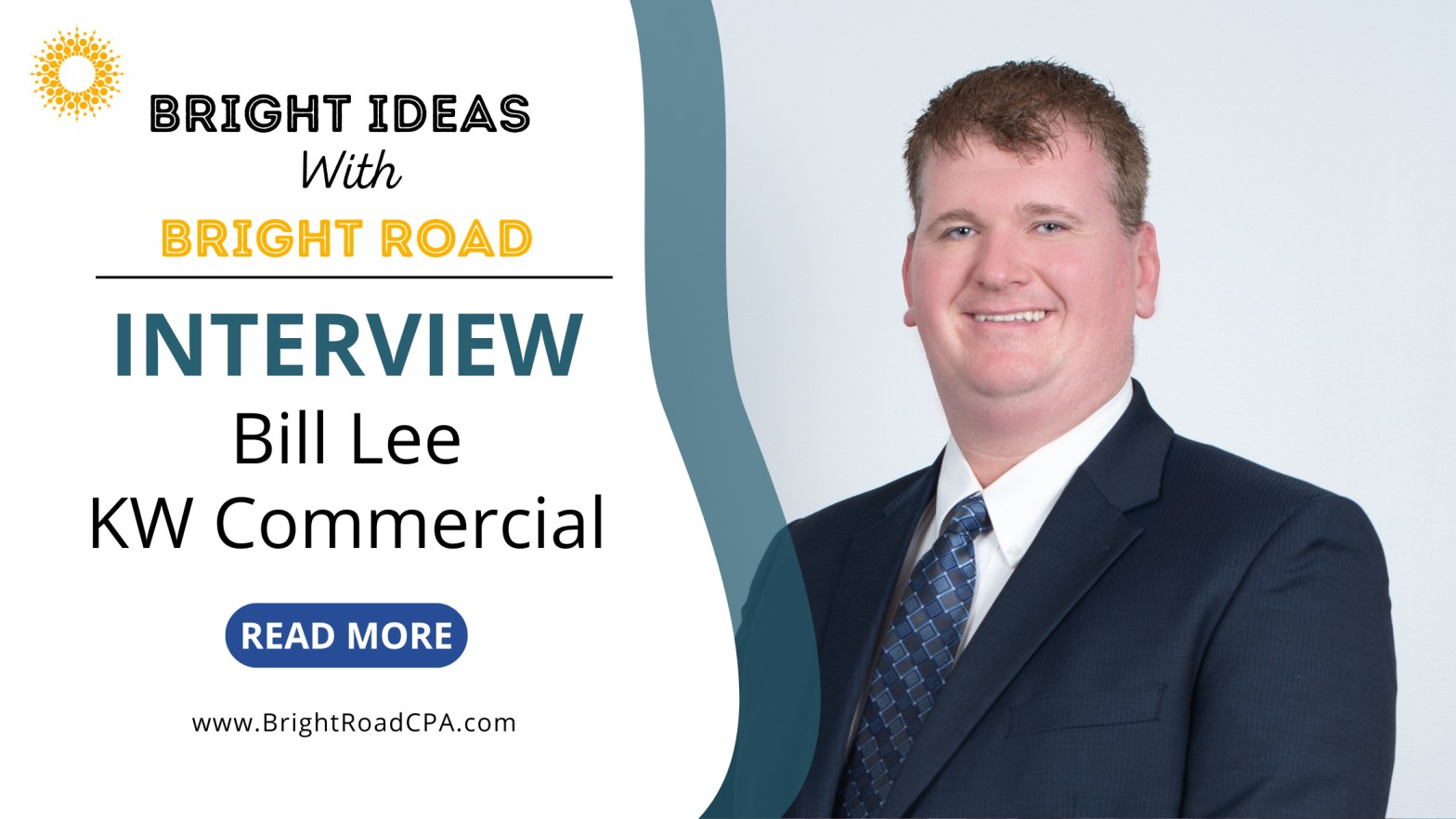
Featuring Bill Lee of The Blatt Group at KW Commercial Community Partners
For most business owners, commercial real estate shows up on the radar as a necessity: you need a place to work, a place to meet clients, a place to grow. But the decisions you make about that space – when to lease, when to buy, how long to commit, and who to trust – can quietly set the stage for either long-term stability or serious strain.
In this month’s Bright Ideas conversation, we sat down with Bill Lee, Senior Real Estate Advisor with The Blatt Group at KW Commercial Community Partners, to talk about the real estate decisions that truly matter.
Bill has spent more than a decade helping clients navigate office, retail, industrial, and investment properties. He’s seen businesses thrive because they made thoughtful real estate moves and he’s seen others nearly sink under the weight of a lease or purchase they weren’t ready for.
His goal isn’t just to close deals. It’s to help owners understand the stakes well enough to make decisions they won’t regret five years from now.
When the Wrong Lease Can Bury a Young Business
One of the first topics Bill raises is timing; not just when you move, but how long you commit.
It’s exciting to find a space that feels “just right.” But enthusiasm can lead to decisions that are hard to unwind. Bill has seen new owners sign long leases before their business model is fully tested, only to discover that the space is either too small, too big, too expensive, or simply not the right fit.
He doesn’t sugarcoat the risk. As he puts it, “getting locked into a five- year lease before you’re off the ground. It could be devastating to a small business.”
That’s not pessimism, it’s protection. A lease isn’t just a monthly payment; it’s a binding commitment that can outlast a business’s early growing pains. Bill’s approach is to help owners find options that give them room to grow and room to adapt. That often means negotiating terms that include exit strategies, renewal options, or flexibility around expansion.
Real estate, in his view, should support the business, not become an anchor that drags it under.
From Emotional Deals to Fact-Finding Missions
Bill’s path into commercial real estate started in residential. Early on, he discovered how emotionally charged home purchases can be. Over time, he realized his natural strengths were better suited to a different kind of conversation.
In commercial work, the stakes are still high, but the focus shifts.
Instead of “Does this feel like home?” the questions become:
- Does this location support your long-term goals?
- Will the numbers still make sense three, five, or ten years from now?
- What are the risks if the business grows faster – or slower – than expected?
Bill describes his role as being “more of an advisory role.” He gathers market data, runs comparisons, and lays out the realities clearly: pricing ranges, likely timelines, hidden costs, and potential upside. But he’s careful not to cross a crucial line: the final call always belongs to the client.
According to Bill, owners don’t need someone to make decisions for them. They need specialists willing to walk alongside them and tell them the truth, even when it’s not what they were hoping to hear.
Lease or Buy? The Question Too Many Owners Skip
Ask Bill about common mistakes, and he doesn’t have to think long. One of the biggest?
“Not evaluating whether or not they should lease or buy.”
It sounds simple. But in practice, many owners default to whatever feels easiest in the moment – often a lease – without stepping back to think through what they’re really trying to build.
In some situations, leasing makes perfect sense. Startups may need flexibility more than ownership. Certain buildouts would be expensive to reverse later, making it more attractive to walk away at the end of a lease and let the landlord handle the next phase.
But in other cases, especially once a business has proven itself and stabilized, ownership opens doors that leasing never will. Bill points out that when you lease, “you don’t have anything at the end of your business. You might have a saleable business, but you don’t have any real estate… You’ve helped somebody else make their real estate portfolio very strong because you have literally been paying their mortgage for however long you’ve been there.”
For some owners, that’s the wake-up call they need. Buying the building through a separate entity and paying rent to themselves can turn a necessary cost into a wealth-building asset – if the timing, financing, and structure are right.
That’s where having a strong CPA and attorney become essential. Bill encourages clients interested in real estate investing to build a team around them and “make sure you have a strong real estate tax CPA and make sure you have a strong real estate attorney.”
Real estate can absolutely build wealth. But it should be done with eyes open, not just because an opportunity happens to show up.
The Case for Having a Coach (and Using Free Help)
Real estate isn’t the only area where owners try to go it alone. Bill sees the same pattern in business planning more broadly — especially among startups in the Dayton and Warren County areas.
He’s a strong advocate for working with the Small Business Development Center (SBDC) and similar organizations. The resources are there, but owners often don’t know to ask.
“Everybody, in my opinion, should have a coach,” he says.
SBDC counselors can help owners build realistic plans, understand financing options (including SBA loans), and avoid taking on obligations they’re not ready to carry. They’ll push back when an idea isn’t ready or when a business owner is trying to sprint ahead without laying the groundwork.
Bill has learned this firsthand in his own business. He admits that in the past, he tried to manage things like bookkeeping by taking the “once a year cleanup” approach, only to discover how painful it is when you can’t remember what that $12.78 charge from last January was all about. Over time, he shifted to monthly reviews and better systems.
It’s a lesson that lines up closely with what we see at Bright Road. Whether it’s financial records or real estate, the combination of clean data and good guidance makes every major decision easier and safer.
Honesty, Fiduciary Duty, and the Cost of Doing the Right Thing
Real estate deals involve a lot of moving parts and a lot of people. Sellers, buyers, tenants, landlords, lenders, attorneys, and sometimes multiple agents. That creates opportunities for confusion and, in some cases, for corners to be cut.
Bill is blunt about where he and his team stand on that.
He takes his fiduciary duties seriously, especially around representation. If he represents the seller, he makes sure potential buyers understand that clearly and he warns them not to share anything they wouldn’t want the seller to know. That level of transparency sometimes surprises people in a world where “just write up the contract” can be a default response.
He’s also candid about the cost of that integrity: “Honesty may have cost us more transactions than anything in the world.”
But for Bill, the tradeoff is worth it. The team “sleeps well at night” knowing they’ve done what they can to protect their clients, even when that means telling hard truths or walking away from questionable situations.
That same principle applies to choosing business partners. He’s seen partnerships fall apart because of fraudulent behavior on one side, forcing a quick sale of a building that was supposed to be a long-term asset. His advice is simple but critical: “Do your due diligence on your business partners, too.”
Planning Ahead: Timelines That Actually Work
When should a business owner call someone like Bill?
The answer might be earlier than you think.
Ideally, he says, owners should be reaching out a year beforehand if they’re considering a move; whether that’s a new lease, an expansion, or a purchase.
That extra time changes everything:
- You can evaluate multiple locations instead of grabbing the first option that’s “good enough.”
- There’s space to negotiate buildout periods and rental abatement so you’re not paying full rent on a space you can’t use yet.
- Your advisor has a chance to coordinate with your CPA, SBDC counselor, and other partners so that financial readiness matches real estate decisions.
By contrast, when someone calls and says they need to be out of their current space within a few weeks or months, leverage disappears. Timelines dictate terms, and the room for negotiation shrinks dramatically.
For startups, Bill often suggests structuring three-year leases when possible. Around year two, he likes to sit down with clients and ask:
- Is this location still serving you?
- Are you outgrowing it faster than expected?
- Are your neighbors driving traffic or holding you back?
- Is it time to renew, relocate, or start planning to buy?
Those conversations are where some of his favorite client stories begin, including one business owner who nearly signed for a tiny 380-square-foot space early on. Bill advised against it, believing she’d outgrow it almost immediately. She walked away frustrated, convinced he “didn’t have a clue” what he was talking about.
Later on, when the business had grown and it was clearly time to move, she came back and told him she was grateful she didn’t lock herself into something that small because she would have outgrown it within two months. That early honesty earned her trust and eventually, her business.
Reading the Local Landscape
Real estate is local. While national headlines can create broad anxiety about interest rates, vacancies, or construction costs, Bill is quick to ground the conversation in what’s actually happening in and around the Dayton region.
Office space, for example, still hasn’t fully recovered from COVID. Vacancy remains high, and very few people are building new office properties unless they’re custom projects for specific needs.
Retail, on the other hand, has rebounded strongly. In many shopping centers, vacancy is low and demand is healthy. Multi-family properties are performing well too, even as interest rate shifts have complicated some investment sales.
On the industrial side, major employers and projects across Ohio – from manufacturing to aviation to data-related infrastructure – are creating ripple effects. Businesses that supply, service, and support those larger operations will need space. Communities are responding with tax credits, abatements, and incentives for owner-operators willing to build or move into those areas.
The takeaway for owners isn’t to chase every new opportunity, but to recognize that real estate can be both a tool for running your business and a vehicle for long-term wealth, especially if you’re paying attention to where growth is actually happening.
Real Estate as Part of the Bigger Picture
At the end of the day, Bill doesn’t treat a lease or purchase as a standalone decision. It’s one part of a larger story: where your business is now, where you want it to go, and what kind of life you’re trying to build.
That’s why he keeps coming back to a few core principles:
- Protect the downside. Don’t let excitement lead you into long commitments your business isn’t ready to carry.
- Ask the “lease or buy” question early. Even if the answer is “not yet,” it should be intentional.
- Use the free help. Organizations like the SBDC exist to help you plan better and avoid expensive mistakes.
- Build the right team. A knowledgeable advisor, a strong CPA, and a solid attorney can turn confusing complexity into manageable steps.
- Give yourself time. Start the conversation months – or even a year – before your lease ends or your growth forces a move.
Done well, commercial real estate doesn’t just give you a place to operate. It helps you build something that lasts.
Want to Connect with Bill?
If you’d like to talk through an upcoming move, explore whether it’s time to consider buying, or simply get a clearer picture of your options, you can reach Bill Lee at:
Phone: 937-474-9395
As Bill says, he’s “a little old-fashioned,” so calling is the easiest way to get started. If he doesn’t answer right away, be sure to leave a voicemail so he can return your call.
Stay Connected
If Bill’s perspective got you thinking differently about your own next steps, there’s more where that came from.
Join the Bright Road newsletter to stay connected for monthly interviews, real-world insights, and practical advice you can actually use.
Each week, we share one short email designed to help you stay organized, make smarter financial decisions, and keep your business moving forward.