What It Really Takes to Sustain a Mission for the Long Term
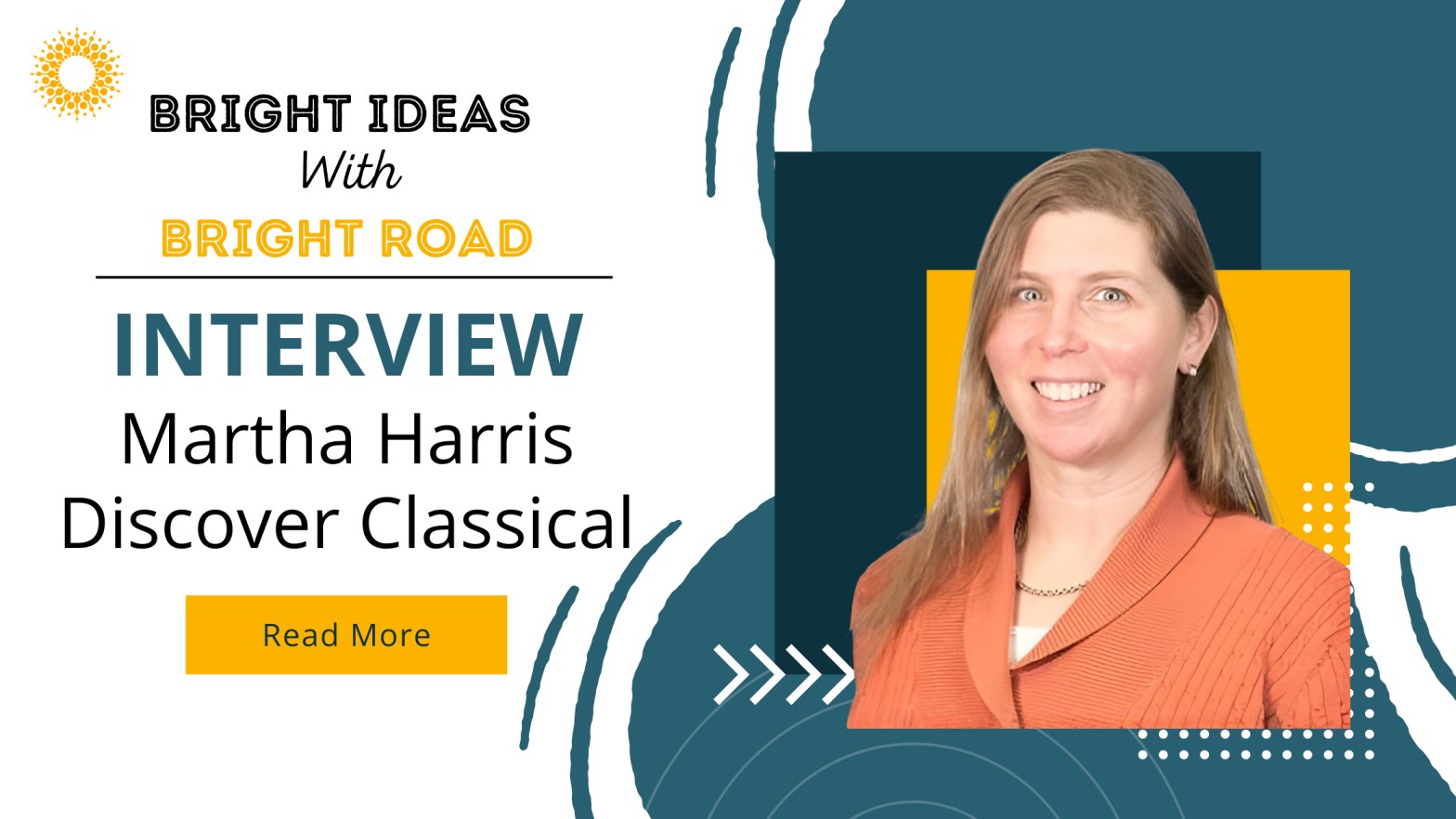
Featuring Martha Harris of Discover Classical
For a lot of nonprofits, “staying alive” can feel like the whole job.
Budgets tighten, grants dry up, leadership turns over, and somehow the mission has to keep going anyway.
And yet, some organizations not only survive, they quietly keep showing up, decade after decade, for the communities they serve.
Discover Classical is one of those.
In this Bright Ideas conversation, we sat down with Martha Harris, Development Director at Discover Classical (Dayton Public Radio), to explore what it really takes to sustain a mission over 40 years and counting and what other nonprofits and small businesses can learn from their journey.
A 40-year experiment in staying power
Discover Classical started in the early 1980s. The first broadcast went out on November 11, 1985, from a part-time signal in the basement of the old Hills and Dales shopping plaza.
A lot has changed since then: the plaza is gone, the station now broadcasts on multiple signals, and “records” have given way to digital playlists. According to Martha, one thing hasn’t changed, though, and that’s the stations mission “to celebrate and advance the fine arts and classical music to enrich the lives of our listeners.”
Martha describes the station’s role as both simple and surprisingly broad. Discover Classical:
- Broadcasts classical music around the clock
- Shares fine arts information and local cultural events
- Keeps talk to a minimum so the music can do the heavy lifting
And despite the “classical music” label, the invitation is wide open. Martha says, “We want to know that everyone, it doesn’t matter if you’re young or old or your background in music, or if you have no musical background, that there’s something for you to discover about classical music when you tune in.”
Martha didn’t arrive as a staff member first; she arrived as a listener.
After moving to the area in the early 2000s, one of the first things she did was find the local public media stations. Discover Classical quickly became part of her routine. Years later, when the opportunity opened to join the team, that existing connection made the leap feel natural.
Discover Classical isn’t just broadcasting music; it’s acting as a hub in a wheel of arts organizations – from the Dayton Performing Arts Alliance and the Springfield Symphony to visual arts and theater groups – amplifying what’s happening across the region.
Classical music as an everyday oasis
If you’ve never spent much time with classical music, it’s easy to picture it as something reserved for concert halls or movie soundtracks; beautiful, but distant.
Martha hears a different story from listeners every day.
She’s quick to push back on the idea that classical music is “for old dead people.” As she puts it, part of the station’s success is that the music itself is timeless:
“It’s been around for hundreds and hundreds of years… people are still listening to Beethoven and Mozart and… the great composers.”
But timeless doesn’t mean stiff.
What Discover Classical offers, and what listeners keep coming back for, is the feeling of having a calm, intelligent companion in the room.
Martha describes the station as “an oasis for people,” a phrase that’s become almost cliché internally only because they hear it so often from members:
“More than that, I think that this music is, it really is an oasis for people… over and over again when we talk to our members… there’s always something new to discover.”
Listeners turn the station on:
- While working
- While cooking dinner
- While winding down in the evening
Sometimes it’s just to fill a quiet house “with something to fill the space but not be distracting.”
And sometimes, it’s much deeper than that.
Martha shares that many people use the station as a companion when they’re elderly or in the hospital. One of the most humbling calls she’s ever received came from a family member after a loss:
“We had your station on while they were passing to help create an atmosphere of peace,” Martha was told.
For a staff built on emails, playlists, and thank-you notes, realizing that your work is present in moments like that has a way of reframing the day.
Financial discipline as a form of flexibility
Romantic as all of that sounds, none of it happens without numbers that work.
As Development Director, Martha oversees membership, fundraising strategy, grants, and events. In practical terms, that means making sure the station’s unusual funding model keeps functioning.
Discover Classical is:
- A public radio station, free to listen to on FM, via app, or online
- A nonprofit that relies heavily on member support
To be considered a member, “you just have to make a financial contribution of any amount,” and those gifts aren’t a side note; they’re the backbone.
Grants help, but not as much as people assume.
According to Martha, “Grants only make up about 20%…grant funding has become increasingly less over the last 15 or 20 years.”
With corporate underwriting accounting for roughly another 10%, that leaves the majority shouldered by individuals: “60 to 70% comes from individual members making a choice to support something that they believe should be part of their community.”
That choice is where “sustainability” becomes real.
On the expense side, “The station has been zero debt since 2009, which is something that allows a nonprofit organization or any organization to take some risks, to experiment a little bit.”
That combination, a broad base of individual supporters and careful avoidance of debt, gives them the freedom to:
- Try new member outreach campaigns
- Invest in technology like internet radio and mobile apps
- Plan a major move into a larger, more community-friendly space
For other nonprofits, the lesson is clear:
Financial discipline isn’t about hoarding; it’s about buying the ability to make better long-term choices.
Adapting without losing your identity
A 40-year-old radio station surviving the streaming era isn’t an accident.
Discover Classical has taken a slow but deliberate approach to growth. First, the move from part-time signal to full-time. Then the purchase of a 50,000-watt antenna in Greenville, expanding coverage across a wide swath of Ohio and into Indiana.
But the bigger shift came with the rise of digital listening.
As Martha points out, many of us don’t even have an FM radio at home anymore; we listen on computers, phones, and smart speakers.
Rather than resisting that change, Discover Classical leaned into it:
- Streaming online at discoverclassical.org
- Launching a mobile app Martha describes as “really cool”
- Using digital outreach to stay visible as listening habits evolve
Her summary of the mindset is blunt and transferable: “If you don’t adapt to how your organization, how your industry does the work, then you will be left behind.”
The next chapter? A move into a new downtown space that will finally bring their long-stored Steinway concert piano out of storage and into a dedicated performance studio with recording and video capability; not just for the station, but for the community.
For a nonprofit, that’s more than a facilities upgrade; it’s a strategic bet that deeper community presence will sustain the mission into its next 40 years.
Donor choice, gratitude, and the long view
Ask Martha what she’s learned about development work, and she starts with something simple that’s easy to forget:
“People can choose to donate to any organization or to patronize any business. There are literally millions of nonprofits… And they are all worthy.”
Her job, as she sees it, is to make the case for why someone should choose Discover Classical, just like a small business owner has to explain why a customer should choose their shop.
That perspective changes how you handle both generosity and limitation.
One of the most memorable membership calls she’s taken came from a long-time donor in the military. Station support had been part of his routine, but he and his wife were trying to cut expenses so they could buy a house.
“He was calling me from an aircraft carrier from an undisclosed location in the middle of the Atlantic Ocean… he was like, I love your station.”
Her response? Encouraging him to spend the money on the house.
That mix of gratitude and release shows up everywhere in her stories, from talking with a listener in Spain streaming the station overseas, to acknowledging that gifts from $50 to $5,000 all represent intentional choices to support something that matters.
And then there are the harder-to-talk-about moments: the end-of-life listening stories, the people who use the station as a steady companion when they’re alone, the family who kept Discover Classical playing while a loved one passed away.
Those are the stories that quietly fuel the work when the spreadsheets feel dry.
Staying human in an algorithmic world
In a media landscape shaped by algorithms, there’s a certain irony in how people discover new music.
Martha points to a New York Times story about how streaming platforms tend to serve more of what you already like, which is convenient, but not always inspiring.
“We like to discover new and interesting things and algorithms don’t support that,” Martha states.
One of the article’s suggestions for finding something truly different?
“Listen to the radio.”
Discover Classical leans into that role. When you tune in, you’re not just getting a shuffle of “classical-ish” tracks. You’re getting context:
- A bit of history behind the piece
- Human stories (such as what inspired the piece)
- Programming that deliberately steps outside what an algorithm would pick next
As Martha puts it, that means recommend people listen to the station because, “We’re going to break your algorithm.”
And behind the scenes, they’ve made a conscious choice to keep real people at the center: “There’s no robot picking out our playlist and there’s no robots answering phones.”
In a world where AI can do more and more, they’ve decided that who curates and who answers still matters.
From our perspective at Bright Road, that resonates. Clean data and smart tools are powerful but it’s the human judgment, context, and care around those tools that actually sustains a mission over time.
What it takes to sustain a mission
By the end of our conversation with Martha, a few patterns were hard to miss. Long-term mission sustainability isn’t about a single “magic” strategy. It’s about a set of disciplines repeated over years:
- Clarity of purpose. A mission that’s simple enough to live daily (“celebrate and advance the fine arts and classical music”) and broad enough to welcome everyone.
- Financial prudence. Staying debt-free, planning growth carefully, and recognizing that grants are helpful but not a silver bullet.
- Adaptation. Moving from records to internet radio, from basement studios to a new space with a performance hall, without abandoning the core of who they are.
- Respect for donor choice. Remembering that people can give anywhere, so every gift represents trust and treating that trust with humility.
- Staying human. Using technology as a tool, not a replacement, and keeping live, local voices at the center of the work.
Those same principles apply whether you’re running a radio station, a small business, or a nonprofit in a completely different field.
Want to connect with Discover Classical?
If Martha’s stories sparked your curiosity (or reminded you it’s been a while since you listened), there are plenty of ways to plug in:
- Listen on FM: 88.1 in Dayton, 89.9 in Greenville, and 89.1 in Springfield/Clark County
- Stream online: Visit discoverclassical.org for a live stream, playlists, program lists, and past arts interviews.
- Download the app: The Discover Classical mobile app makes it easy to listen wherever you are.
- Support the station: You’ll find a “Donate” button right next to the “Listen” button on their website. Gifts of any amount matter; as Martha says, your contribution says, “I’m a listener and I support what you do.”
Stay connected
If Martha’s perspective got you thinking differently about what it takes to sustain your own mission – whether you’re leading a business, a nonprofit, or something in between – we’d love to keep the conversation going.
Join the Bright Road newsletter to stay connected for:
- Monthly interviews with local leaders
- Real-world insights from the front lines of running organizations
- Practical financial advice you can actually use
Each week, we share one short email designed to help you stay organized, make smarter financial decisions, and keep your business or nonprofit moving forward.